Is condo life in West Maui calling your name, but you are not sure which neighborhood fits you best? You might be picturing open-water views, easy beach access, and a quieter pace than the big resorts. In this guide, you will learn how Napili, Kahana, and Honokowai compare, what typical condos look like, how short-term rental rules work, and what costs to expect before you buy. Let’s dive in.
Where these neighborhoods sit
The Napili–Kahana–Honokowai corridor lines up along Lower Honoapiʻilani Highway on West Maui, with Napili to the north, Kahana in the middle, and Honokowai just north of Kāʻanapali. From Kahului Airport (OGG), you can expect about 45 to 55 minutes by car depending on traffic. Napili Bay is a small crescent beach that many people love for calm morning water and snorkeling, and visitor parking at the bay is limited, which is helpful to know ahead of time. For an overview of Napili Bay’s setting and character, see this summary of the beach and access notes from a local guide to Napili Bay.
- Learn more about the bay’s calm mornings, snorkeling, and parking context in this overview of Napili Bay.
Neighborhood snapshots
Napili: Classic small-bay living
Napili centers on its sheltered crescent beach, low-rise condos, and a few popular eateries. Mornings are often calm in the bay, which helps snorkeling and turtle spotting. The scale feels smaller than central Kāʻanapali, and many buyers choose Napili for a simple, beach-first lifestyle. Visitor parking near the bay is tight, so expect more walking and plan ahead for beach days. You can preview the bay setting here: Napili Bay beach profile.
Kahana: Local feel with easy access
Kahana sits between Napili and Honokowai with a mix of oceanfront and neighborhood condos. Many complexes here feel more residential than full-scale resorts, with walkable access to small shops and dining at Kahana Gateway Center. It is a practical choice if you want a calmer base with quick access to both Kapalua and Kāʻanapali. Get a sense of Kahana’s mix of buildings and services in this Kahana neighborhood overview.
Honokowai: Oceanfront condo convenience
Honokowai forms a band of oceanfront and near-ocean condos close to Kāʻanapali, with a beach park that has tidal pools and small sandy areas. Many buildings have resort-style landscaping, and there is a compact commercial node with grocery options and shops that support daily needs. If you want easy access to Kāʻanapali without its higher-rise density, Honokowai can be a strong middle ground. See the beach park’s setting in this Honokowai Beach Park guide.
Condo types and floorplans
Building styles you will see
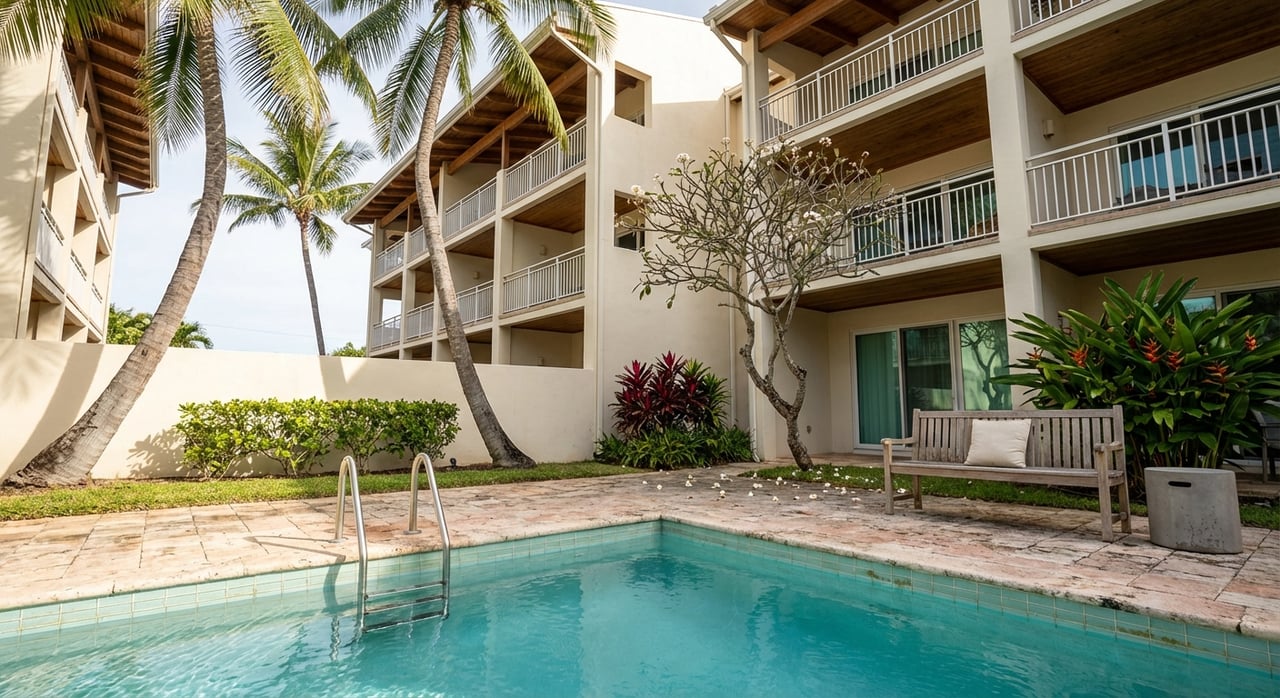
Most buildings in this corridor are low to mid-rise. You will find garden-style walk-ups of 1 to 3 stories, plus several 2 to 4 story resort-style complexes. Examples you may come across include Kuleana, Papakea, Hale Ono Loa, and Royal Kahana. These vary by age, amenities, and whether they sit directly on the shoreline or across the road.
Typical unit sizes
Older resort condos in the area often lean compact. Studios and smaller one-bedrooms commonly run about 400 to 800 square feet, with projects like Napili Shores offering studio and one-bedroom footprints. See a representative floorplan example from Napili Shores. One-bedroom units often range from about 450 to 800 square feet. A recent example at Royal Kahana cites a one-bedroom near 777 square feet and supports the common size range. You can review a current Royal Kahana detail for context on size and finishes here: Royal Kahana example listing. Two-bedroom, two-bath condos often span roughly 800 to 1,300 plus square feet, and oceanfront suites in this category can sell above 1 million dollars depending on view, size, and upgrades.
Ownership, zoning, and rentals
Fee simple vs leasehold
Most modern condo sales in West Maui are fee simple. Leasehold still exists, especially in parts of Honokowai, where leases carry a monthly ground rent and include expiration and reset terms that affect value and financing. If you consider a leasehold unit, ask for the lease expiration date, current ground rent, and how resets work over time.
Short-term rental rules today
Some older apartment-zoned buildings historically allowed vacation rentals under a legal framework often called “Minatoya.” The Maui County Council passed Bill 9 in December 2025, which phases out transient vacation rental uses in apartment-zoned districts on a schedule. For West Maui, enforcement is set to begin January 1, 2029. Read the county action here: Bill 9 passage report. Lawsuits were filed soon after, and those legal challenges may affect timing or outcomes. See an update on litigation here: Bill 9 legal challenge. Always confirm the exact zoning and short-term rental entitlement for the unit’s Tax Map Key against the County zoning code and with Maui County Planning before you rely on rental income.
Life by the beach
Beach access and parking
Napili Bay offers a small, walkable crescent beach that is popular for calm morning snorkeling, but public parking is limited. Along the corridor, some condos sit right on the shoreline while others are across the road. When you tour, note how your lanai lines up with the view and whether it is direct ocean, partial ocean, or mountain, because that can change both lifestyle and value. For a sense of Napili’s beach character and logistics, see the Napili Bay profile.
Groceries, services, and daily needs
You will find daily needs close by in each sub-area. Kahana has a small hub at Kahana Gateway Center with shops and eateries. Honokowai offers a compact commercial center and grocery options near the beach park, so you can stock up without heading into Lahaina.
Walkability and getting around
Walkability is high inside the immediate beach and shopping clusters, and lower once you move inland or between pockets. Parking is often assigned by complex, and visitor parking can be tight near the most popular beaches. Plan on short drives for most errands and beach days, with Kāʻanapali’s dining and shopping a few minutes to the south.
Costs to expect
HOA and AOAO basics
Condos in Hawaii are managed by an Association of Apartment Owners, often called an AOAO. Monthly fees typically cover exterior insurance, common-area maintenance, water or trash in some buildings, landscaping, pools, and reserves. Fees vary widely based on amenities and the building’s age and condition. Before you offer, review the AOAO budget, reserve study, insurance declarations, and recent meeting minutes. Here is an example of how listings summarize fee coverage and building context in the area: AOAO fee coverage example.
Insurance and building condition
Coastal buildings face salt air, which can lead to concrete spalling, rebar corrosion, and pipe updates as structures age. Some boards use special assessments or loans to fund major repairs. Reserve studies and master insurance policy details matter a lot in West Maui today. For broader context on Hawaii’s condo insurance and maintenance pressures, review this statewide look at rising costs and impacts: Hawaii condo insurance overview.
Price ranges today
Recent West Maui condo sales show wide variation by building, view, size, and condition. Oceanfront one-bedroom units in this corridor have traded from the mid 500,000 dollar range to above 1 million dollars. Studios and leasehold units often sell at lower price points. Two-bedroom oceanfront suites can exceed 1 million dollars. For a sense of sizing and a recent one-bedroom context, see this Royal Kahana example. Always anchor your expectations to the latest MLS data for the exact complex you are targeting.
Taxes if you rent short term
If you plan to operate a short-term rental where allowed, you will typically pay the State Transient Accommodations Tax, the Maui County TAT surcharge, and the General Excise Tax on rental income. Local guides often peg the combined effective load in the high teens as a percent of gross, but you should verify current rates with the State and County before modeling cash flow. For a clear primer on the tax stack, see this Maui short-term rental tax overview.
Where to focus your search
- Want the quietest small-bay vibe and a simple beach routine? Start in Napili for a lower-rise, classic bay setting with calm morning water. Review the bay setting here: Napili Bay overview.
- Prefer a local neighborhood feel with shops and short drives to both Napili and Kāʻanapali? Focus on Kahana’s mid-corridor buildings. See a concise Kahana neighborhood snapshot.
- Want an oceanfront condo lifestyle with quick access to Kāʻanapali dining and shopping? Look in Honokowai’s oceanfront and near-ocean complexes. Get a feel for the coastline at Honokowai Beach Park.
Buyer checklist for any complex
- Zoning and TMK. Confirm A-1 or A-2 apartment zoning versus hotel zoning and fee simple versus leasehold status. Start with the County zoning code.
- Short-term rental status. Verify whether the specific TMK is currently allowed for transient rentals, any AOAO rules, and how Bill 9 and ongoing legal challenges may affect future use.
- Leasehold terms. If leasehold, pull the lease document for expiration, current ground rent, reset schedule, and lender acceptance.
- AOAO financial health. Request the budget, latest year-end financials, reserve study, insurance declarations, and any notice of special assessments.
- Comparable sales and inventory. Ask for closed sales in the building over the last 12 months and current inventory to bracket value.
- Unit features and floorplan. Confirm typical sizes for studios, one-bedrooms, two-bedrooms, and whether units include in-unit laundry, AC, assigned parking, or storage.
- Daily-life proximity. Note minutes to the nearest beach access, supermarket, clinic, and your typical drive times to Kāʻanapali and Lahaina.
Ready to explore your options?
If West Maui condo life is on your horizon, you deserve local guidance that blends deep neighborhood knowledge with practical, end-to-end support. The Marchello Team pairs decades of West Maui experience with full-service transaction help and an integrated property-management channel when you need it. Connect with Mark Marchello to compare buildings, confirm rental status, and tour the right options for your goals.
FAQs
What is the main difference between Napili, Kahana, and Honokowai?
- Napili centers on a small crescent bay and low-rise buildings, Kahana offers a local neighborhood feel with shops, and Honokowai lines up oceanfront condos close to Kāʻanapali.
How long is the drive from OGG to Napili–Honokowai?
- Plan on about 45 to 55 minutes by car depending on traffic and time of day.
Are short-term rentals still allowed in apartment-zoned condos?
- Many were historically allowed under the Minatoya framework, but Bill 9 phases out transient rentals in apartment zones in stages, with West Maui enforcement set for January 1, 2029, subject to litigation outcomes.
What sizes are most common for condos here?
- Studios and small one-bedrooms often run 400 to 800 square feet, many one-bedrooms sit around 450 to 800 square feet, and two-bedrooms often range from roughly 800 to 1,300 plus square feet.
What fees should I expect from the AOAO?
- Monthly fees usually cover exterior insurance, common-area care, water or trash in some buildings, landscaping, pools, and reserves, but coverage and amounts vary by complex.
What should I look for in an older oceanfront building?
- Review the reserve study, master insurance policy, recent or planned projects, and any special assessments, since salt air can drive spalling and repiping over time.